Condemns Western Sanctions, Asset Freezing and Economic Coercion
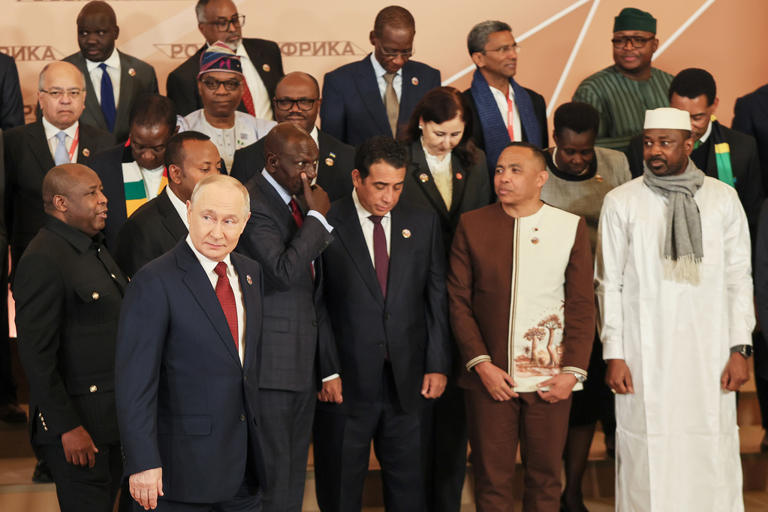
African heads of state and governments, including Ethiopian PM Abiy Ahmed, and Russian leadership have issued a pressing demand for historical accountability, pushing for the creation of binding legal mechanisms to assess and compensate for the extensive economic, social, and structural damages inflicted on African nations during the colonial era.
The leaders issued ‘Declaration of the Third Russia-Africa Summit’ on Thursday, which seeks to contribute to the “completion of the decolonization process in Africa, and seek the creation of legal mechanisms for assessing and compensating for the damage caused to African countries during the colonial period.”
This landmark call at the third Russia-Africa Summit directly echoes the momentum of recent international milestones, most notably United Nations General Assembly Resolution 80/250, which officially declared the trafficking of enslaved Africans and racialized chattel enslavement as the gravest crime against humanity. Building directly upon the outcomes of the High-Level Consultative Conference on the Implementation of Resolution 80/250 held in Accra, Ghana, leaders in Moscow emphasized that formal recognition must now evolve into actionable reparatory justice. The UN framework underscores that international wrongful acts entail a clear legal duty of restitution, compensation, rehabilitation, and the unconditional return of cultural properties and national archives plundered during colonial rule.
Expanding on these principles of sovereignty and historical redress, the newly adopted Moscow Declaration outlines a robust framework to dismantle lingering neo-colonial practices, with participating leaders fiercely opposing unilateral coercive measures, secondary sanctions, and the unlawful practice of freezing or seizing sovereign assets, denouncing such economic tactics as instruments of political pressure. Furthermore, the declaration champions comprehensive structural reforms of the United Nations Security Council to correct historical injustices against the continent, reaffirming the common African position enshrined in the Ezulwini Consensus and the Sirte Declaration to secure permanent representation for African states.
Adding a major security and strategic dimension to the summit, PM Abiy made significant defense disclosures on the sidelines of the event, announcing that Ethiopia has taken delivery of 12 Russian-made Su-35 multirole fighter jets ahead of schedule alongside plans to acquire four batteries of the advanced S-400 air defense system. Speaking directly to Russian media during his visit, PM Abiy described the milestone defense acquisition as a crucial step for national security, stating that these advanced systems were agreed upon years ago and represent a major milestone that significantly boosts Ethiopia’s sovereignty, territorial defense capacity, and regional stability.
The summit also served as a high-stakes diplomatic theater for wider East African power dynamics. Sudan’s Sovereign Council President, General Abdel Fattah al-Burhan, utilized the Moscow gathering to project diplomatic leverage and shore up international backing amidst the protracted civil conflict in Sudan, engaging heavily with Russian authorities who have historically provided diplomatic support at the UN Security Council.
Meanwhile, high-level attention focused on regional security tensions, particularly regarding the Horn of Africa. Prior to the summit, Moscow formally offered to host and facilitate neutral mediation between PM Abiy and Eritrean President Isaias Afwerki. Although both leaders were present in Moscow, no official communiqués were released by press time confirming whether a formal mediation session was convened.
For Ethiopia, the summit further cemented its continental leadership across environmental and multilateral spheres. The Moscow Declaration formally welcomed the upcoming hosting of the 32nd session of the Conference of the Parties (COP32) to the UNFCCC in 2027 on the African continent in Ethiopia, placing Addis Ababa at the forefront of international climate negotiations, adaptation financing, and green resilience. On the sidelines of the summit, PM Abiy also offered to host the next Russia-Africa Summit in Addis Ababa, reinforcing the city’s status as the diplomatic capital of the continent.
To ensure these political dialogues translate into concrete socioeconomic and technological outcomes, the summit formally endorsed the Action Plan of the Russia-Africa Partnership Forum for 2027–2029. The multi-year roadmap establishes practical cooperation targets in agricultural modernization, fertilizer supply, energy security—including support for projects like Mission 300 to expand electricity access—and critical raw material processing aimed at securing local value addition and industrialization. Additionally, the adoption of a specialized declaration on cooperation in the civilian use of Artificial Intelligence paves the way for joint ventures in digital infrastructure, cybersecurity, and technological sovereignty across participating member states.
Source: The Reporter